


Coffee Packaging, Explained
Private-label coffee packaging has changed a lot in recent years. It is no longer just about design or how it looks on the shelf. Now, packaging also protects the product, supports logistics, meets regulatory requirements, and helps achieve sustainability goals. All at the same time.
To see how these choices are made, we spoke with Valerie Veldeman, Packaging & Design Coordinator at Beyers. She shared how packaging is developed for pads, capsules, beans and ground coffee, and how we are committed to making all our packaging reusable, recyclable or compostable by 2030.
This direction also aligns with upcoming European regulations such as the Packaging and Packaging Waste Regulation (PPWR), which will require all packaging placed on the EU market to be recyclable by 2030 and encourages greater use of recycled materials across the industry.
“Packaging has two responsibilities,” Valerie explains. “It has to protect the coffee perfectly and it has to evolve toward more sustainable materials.”
This balance guides every packaging choice at Beyers. We reduce materials where we can and optimize bag sizes to avoid waste. Paper and cardboard are always FSC or PEFC certified*. Outer boxes use recycled board, and pallet wrap now includes 30% recycled plastic. When possible, we use mono-materials to make recycling easier while keeping packaging strong and reliable.
We use this same approach for all our packaging formats.
Capsules and Pads: Practical Formats with a Sustainable Direction
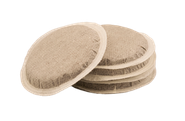 Coffee pads are made with PLA paper*, so they can be composted in industrial facilities. The bag can be made from mono PP foil*, which makes recycling easier while still protecting the product during storage and transport.

Capsules need strong oxygen protection to maintain arom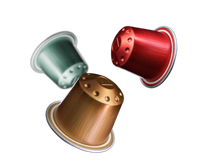 a and freshness. Aluminium capsules offer the best barrier and are made with at least 90% recycled aluminium and they are fully recyclable. Plastic capsules with an aluminium base also protect well and work with many machines. In markets where easy disposal matters, Beyers offers home-compostable capsules made from renewable plant-based materials. All primary packaging, such as boxes or tubes, is PEFC-certified by default.
Roasted Beans & Ground Coffee: Formats Designed for Today’s Market
Every packaging project starts with finding the right balance. Together with our customers, we look at what the coffee needs, how the product will be sold and which sustainability improvements are possible. From there, formats, materials and barrier properties are evaluated to develop packaging that protects the coffee while supporting long-term progress.
 For beans and ground coffee, freshness depends on oxygen control. Every bag includes a valve that releases CO₂ while preventing oxygen from entering. Formats range from 200g to 1200g, and where technically possible, mono PP materials are introduced to simplify recycling while maintaining strength and barrier performance.
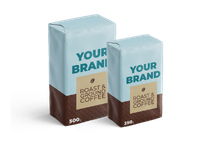 Our vacuum ground coffee comes in 250g and 500g packs, including 4x250g promotional packs. These rely on low oxygen levels to keep the coffee fresh longer. The paper wraps and head labels are FSC certified, so the materials are responsibly sourced.
Looking at packaging this closely means working through a lot of small technical decisions. Materials, barriers, formats and logistics all have to fit together.
“It’s a very practical process,” Valerie explains. “You look at what the coffee needs, what the machines require and what the market expects, and then you build the packaging around that.”
* FSC® or PEFC certified: Certification systems that ensure paper and cardboard come from responsibly managed forests and controlled sources.
* PLA paper: Paper combined with polylactic acid (PLA), a bio-based material derived from renewable resources, allowing the pads to be industrially compostable.
* Mono PP foil: Flexible packaging made primarily from polypropylene (PP), designed to improve recyclability compared to multi-layer laminates.